The Ultimate Guide to Sugar Scrubs: Why Your Skin Will Thank You
If your skincare routine is all lotions and serums and no exfoliation, you're skipping the one step that makes everything else work better. Sugar scrubs have quietly become a staple for a reason: they're one of the simplest ways to turn dull, flaky skin into something that actually looks like it's glowing.
What a sugar scrub actually does
A sugar scrub works on two levels at once. Physically, the sugar crystals gently buff away the layer of dead skin cells sitting on the surface — the stuff that makes skin look dull, feel rough, and block moisturizer from doing its job. At the same time, the oils and butters suspended in the scrub condition your skin as you rinse, so you're not left with the tight, stripped feeling you get from a lot of physical exfoliants.
That combination is the whole point. Exfoliate without moisture, and you irritate. Moisturize without exfoliating, and you're just layering product on top of dead skin. A good scrub does both in one step.
Why sugar instead of salt or microbeads
Sugar crystals dissolve in water, which means they naturally soften as you massage them in — they start coarse enough to actually exfoliate, then smooth out before they can micro-tear the skin. Salt scrubs stay sharp-edged the whole time, which is why they're rougher and generally not recommended for your face or sensitive areas. Plastic microbeads don't dissolve at all, which is exactly why so many of them ended up banned — they wash straight into waterways. Sugar is effective and it disappears down the drain the way it should.
What makes a whipped formula different
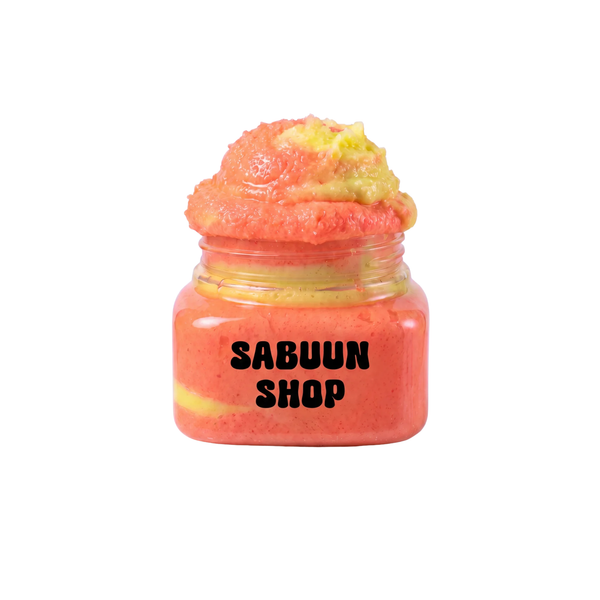
Our scrubs use a whipped, foaming base built on Shea Butter, Aloe Leaf Juice, and gentle surfactants. The moment water hits it, the texture shifts from a fluffy, ice-cream-like scoop into a rich, sudsy lather — so you get the scrub action and a proper cleanse in the same motion, then step out with skin that's soft instead of squeaky-stripped.
Who it's for
Sugar scrubs are gentle enough for most skin types, but if you have very sensitive or compromised skin, patch test first and start with once a week. Everyone else can comfortably work up to two or three times a week on body skin (keep it away from your face unless a product is specifically formulated for one).